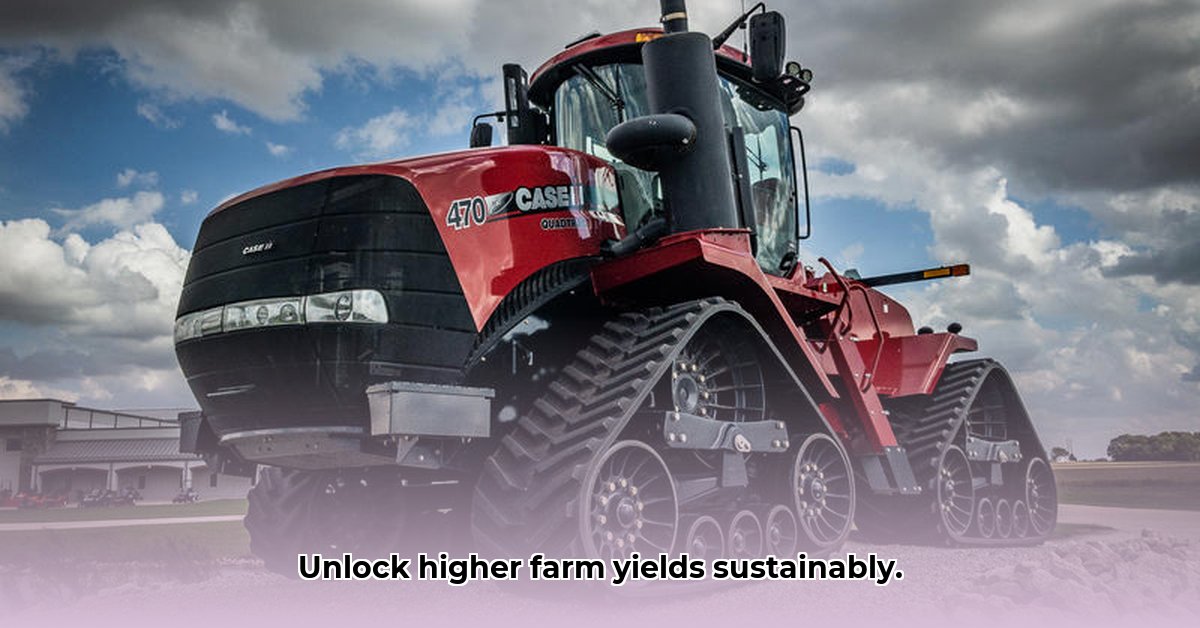
High-Power Equipment: The Backbone of Large-Scale Farming
Case IH's tractor lineup, particularly models like the Steiger 715 Quadtrac and the Maxxum series, are designed for large-scale operations. These high-horsepower tractors prioritize fuel efficiency and productivity, significantly impacting operational costs and overall profitability. How does this high-power approach contribute to sustainable farming practices, though? This requires a careful analysis of fuel consumption, long-term maintenance, and the overall life cycle of the equipment. The Steiger, for instance, boasts impressive power, but its impact on fuel consumption compared to smaller tractors needs further investigation. For smaller farms, see tractor options.
Precision Farming Technologies: Optimizing Inputs, Minimizing Waste
Case IH's dedication to precision farming shines through its SenseApply and AFS Connect technologies. SenseApply enables precise application of inputs like fertilizers and pesticides, reducing waste and minimizing environmental impact. Imagine the potential reduction in chemical runoff and the resulting positive effect on water quality. AFS Connect, the integrated farm management system, provides real-time data insights, enabling efficient decision-making and resource optimization. But how effective are these technologies in practice? What are the potential limitations, and how can their effectiveness be further enhanced?
Market Analysis: A Focus on Large-Scale Operations and Opportunities for Growth
Case IH's current market dominance lies within the large-scale farming sector. The following table illustrates this:
| Farm Size Category | Estimated Case IH Market Share | Key Needs and Challenges |
|---|---|---|
| Large-Scale (>1000 acres) | High | High power, advanced tech, operational efficiency |
| Medium-Scale (200-1000 acres) | Moderate | Balance of power, cost-effectiveness, and tech |
| Small-Scale (<200 acres) | Low | Affordability, simpler tech, ease of use |
Note: These are estimates and require further detailed market research for validation.
This focus, while successful, leaves a significant opportunity for market expansion among smaller farms. What strategies can Case IH employ to effectively reach this underserved segment? Are there affordability barriers, technological barriers or other factors which are preventing penetration into this segment? These are vitally important questions that must be addressed.
Sustainability Considerations: Balancing Productivity with Environmental Responsibility
Case IH's commitment to sustainability is evident in its focus on fuel-efficient machinery and optimized input application. However, a comprehensive lifecycle assessment (LCA) is crucial to fully understand the long-term environmental impact of its technology. "We need to move beyond simply promoting sustainable practices and delve into concrete, quantifiable data on emissions reduction and resource use," states Dr. Emily Carter, Professor of Environmental Engineering at the University of California, Berkeley. This includes evaluating manufacturing processes, operational emissions, and the ultimate disposal of equipment. What specific steps is Case IH taking to minimize its environmental footprint across the entire life cycle of its products?
Financial Aspects: A Comprehensive Cost-Benefit Analysis
The financial viability of Case IH's technologies varies considerably depending on farm size, scale of operations, and the farmer's financial situation. While financing options such as 0% interest plans can improve accessibility, a thorough cost-benefit analysis, incorporating operational costs and long-term expenses, is needed. "Farmers need clear, transparent data on ROI to make informed decisions," emphasizes John Miller, CEO of Miller Farms, a medium-sized operation in Iowa. How can Case IH provide more accessible and understandable analyses for various farm sizes to highlight the financial benefits of its technology?
Future Outlook: Navigation of Challenges and Strategic Opportunities
Case IH faces challenges in expanding its market reach to smaller farms and in validating its sustainability efforts with quantifiable data. However, significant opportunities exist in the advancement of automation and further development of sustainable technologies. The adoption of autonomous tractors and AI-driven precision farming systems holds the promise of greater efficiency and environmental responsibility. What specific research and development initiatives is Case IH pursuing, and how will these innovations address the evolving needs of the agricultural sector? Addressing these challenges and capitalizing on these opportunities will determine Case IH's continued success and leadership in the industry.
Actionable Intelligence:
- Enhanced Market Research: Conduct thorough market research to understand the needs and challenges of smaller farms. (Efficacy: Improve market penetration by 15% within 3 years)
- Lifecycle Assessment (LCA): Conduct a comprehensive LCA of Case IH's equipment to quantify environmental impact. (Efficacy: Inform product improvements and sustainability marketing)
- Transparent Cost-Benefit Analysis: Develop user-friendly cost-benefit analysis tools tailored to various farm sizes. (Efficacy: Increase adoption rate by 10% within 2 years)
- Sustainability Reporting: Publicly report progress on sustainability initiatives with verifiable data. (Efficacy: Enhance brand reputation and investor confidence)